Open to global opportunities

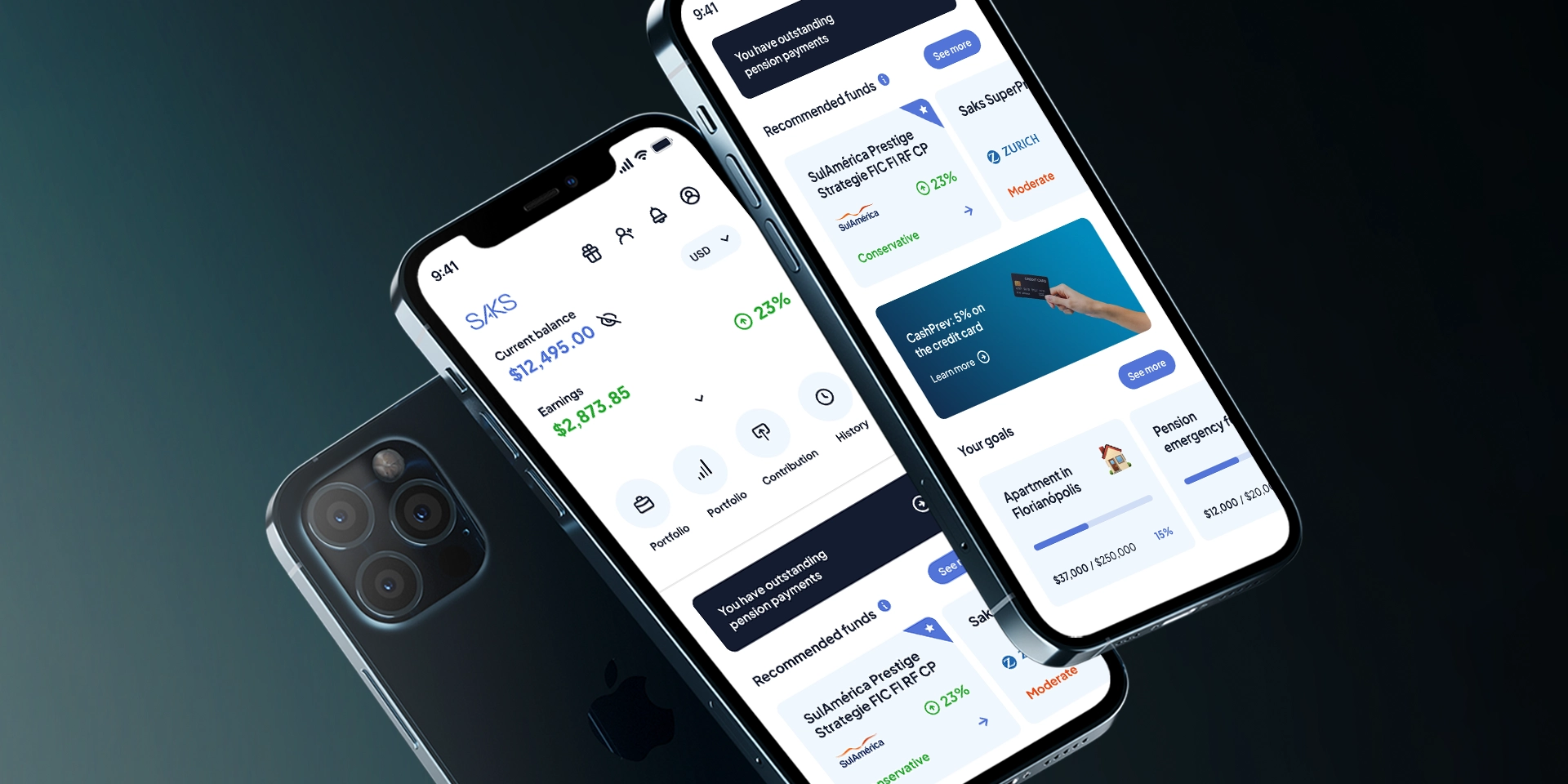
Saks Global is a financial services platform that enables users to manage private pension investments and track long-term retirement performance.
The mobile application is a key touchpoint for customers, providing access to portfolio insights, investment allocation and financial performance.
However, as the product evolved over time, the experience became fragmented. Navigation was inconsistent, financial information was difficult to interpret and core actions required too many steps.
This resulted in increased user friction and limited engagement with the platform.
The redesign focused on simplifying complex financial interactions, improving information clarity and building a scalable design foundation for future product growth.
The existing application had grown organically without a unified product design strategy.
Over time, new features were added without restructuring the overall experience. As a result, users faced several usability challenges when interacting with the platform.
Key problems included:
• fragmented navigation structure
• lack of visual hierarchy for financial data
• complex investment flows requiring multiple steps
• inconsistent interface patterns across the product
These issues created friction in critical moments of the user journey, particularly when reviewing investment performance or making portfolio decisions.
The challenge was to redesign the experience while maintaining trust and clarity in a financial environment where accuracy and transparency are essential.
I led the redesign of the mobile product experience, working closely with product managers, engineers and business stakeholders.
My responsibilities included:
• defining the UX strategy for the redesign
• conducting usability analysis and product evaluation
• designing new navigation and interaction patterns
• creating high-fidelity product interfaces
• building a scalable design system
• supporting engineering implementation
The goal was not only to improve usability but also to create a product structure capable of supporting future financial services features.
To understand the root causes of the usability challenges, I conducted a combination of product analysis and qualitative research.
The research focused on identifying where users experienced friction during key financial tasks.
Methods used included:
• usability testing
• analytics review
• stakeholder interviews
• product flow analysis
Key insights revealed that users struggled primarily with understanding investment performance and navigating between portfolio sections.
Financial data lacked clear visual hierarchy, making it difficult for users to quickly interpret important information.
These insights became the foundation for the redesign strategy.
Based on the research insights, the redesign focused on three core strategic principles.
Simplify navigation
The information architecture was restructured to reduce cognitive load and make key sections easier to access.
Clarify financial storytelling
Investment data was redesigned to provide clearer visual hierarchy and improve comprehension.
Create a scalable design system
Reusable components and standardized interaction patterns were introduced to ensure consistency across the product.
This strategic approach allowed the product team to improve usability while creating a foundation for future product expansion.
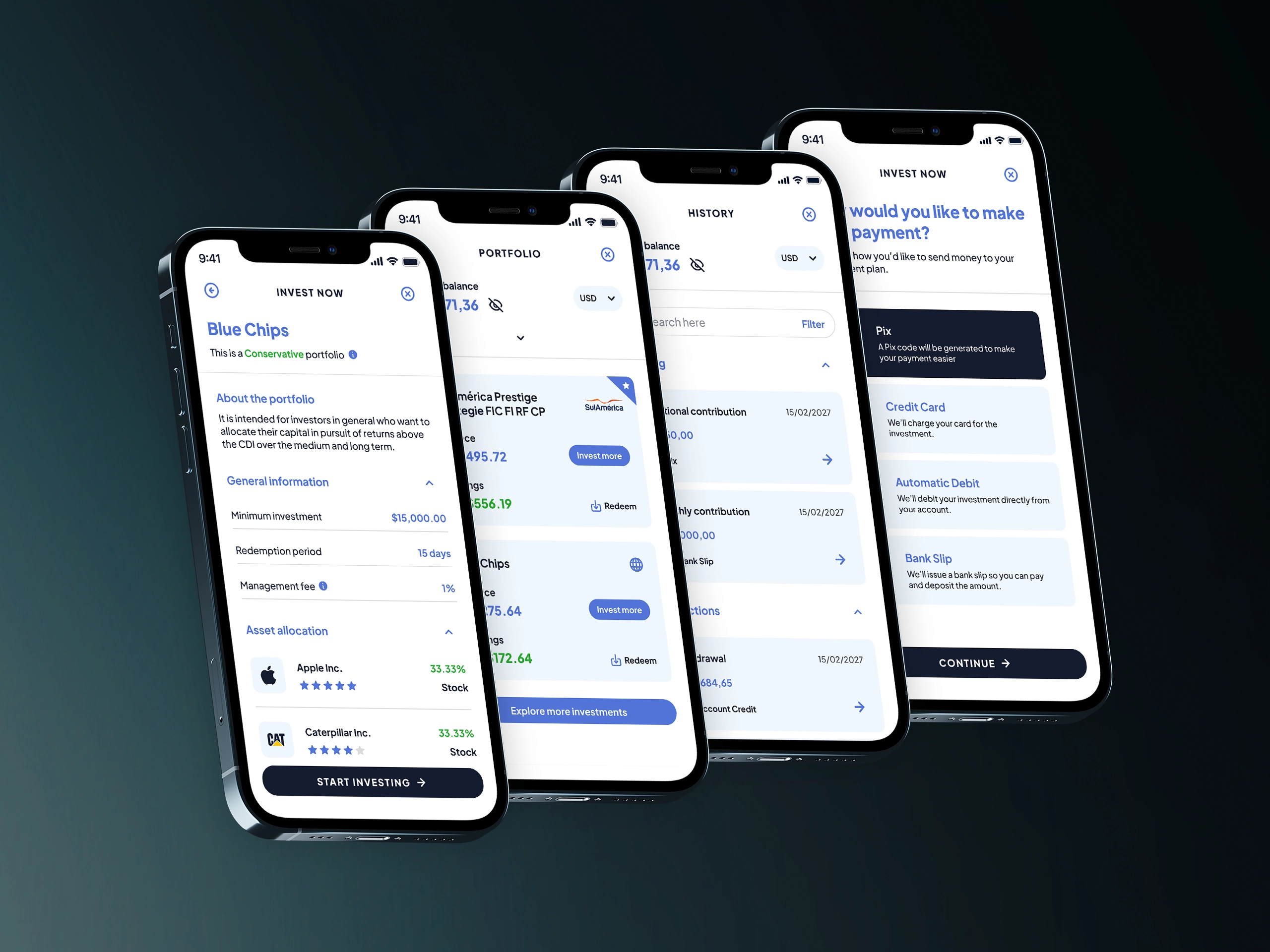
The redesign followed an iterative product design process, starting with restructuring the core user flows.
Early wireframes were used to explore alternative navigation models and simplify complex financial interactions.
Prototypes were then created to validate the new structure and evaluate usability improvements.
Once the interaction patterns were validated, high-fidelity designs were developed and integrated into a scalable design system.
To ensure long-term consistency across the platform, a modular design system was introduced.
The system included standardized components, typography hierarchy and interaction patterns designed specifically for financial products.
This approach improved collaboration between design and engineering while enabling faster development of future features.
The design system also ensured a consistent user experience across different sections of the product.
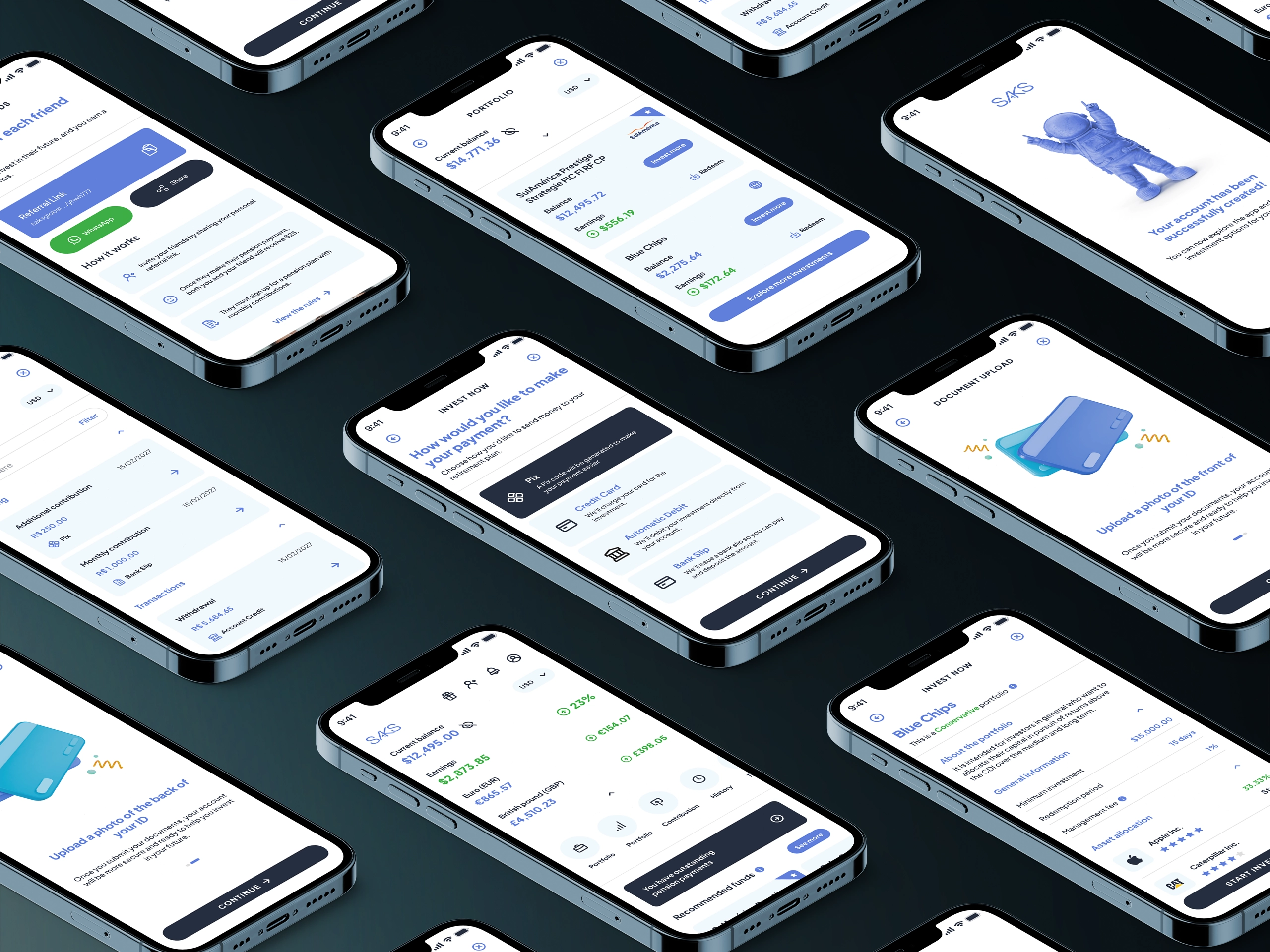
The redesigned mobile experience introduced clearer navigation, improved financial visualization and simplified portfolio management flows.
Users are now able to quickly understand investment performance, navigate between portfolio sections and manage financial decisions with greater confidence.
The new experience also provides a scalable design foundation that supports the future evolution of the Saks Global product ecosystem.
The redesign significantly improved the usability and structure of the Saks Global mobile product.
By simplifying navigation and improving financial clarity, the platform now provides a more intuitive experience for long-term investment management.
The project also introduced a scalable design system that supports future product development and improves collaboration between design and engineering teams.
These improvements helped align the product experience with the company’s long-term digital strategy.